
Insights · Standards
The standard that makes remanufactured lighting credible.
There's a British Standard for remanufacturing lighting. EGG Lighting contributed to writing it.
Core principle
BS 8887-221 draws the line between a genuine rebuild and a wipe-down — and puts documentation behind it.
The standard
Published by BSI, end of 2024.
BS 8887-221:2024 — Design for Manufacture, Assembly, Disassembly and End-of-Life Processing (MADE): Remanufacture of Luminaires — is a code of practice, and the first sector-specific part of the BS 8887 series. Until it existed, "remanufactured lighting" could mean almost anything — a wipe-down and a new lamp, or a full rebuild to as-new specification.
BS 8887-221 draws the line. It sets out what has to happen, and what has to be documented, before a fitting can honestly be called remanufactured rather than refurbished, repaired or reused.
What the standard covers
An industrial process — not a marketing term.
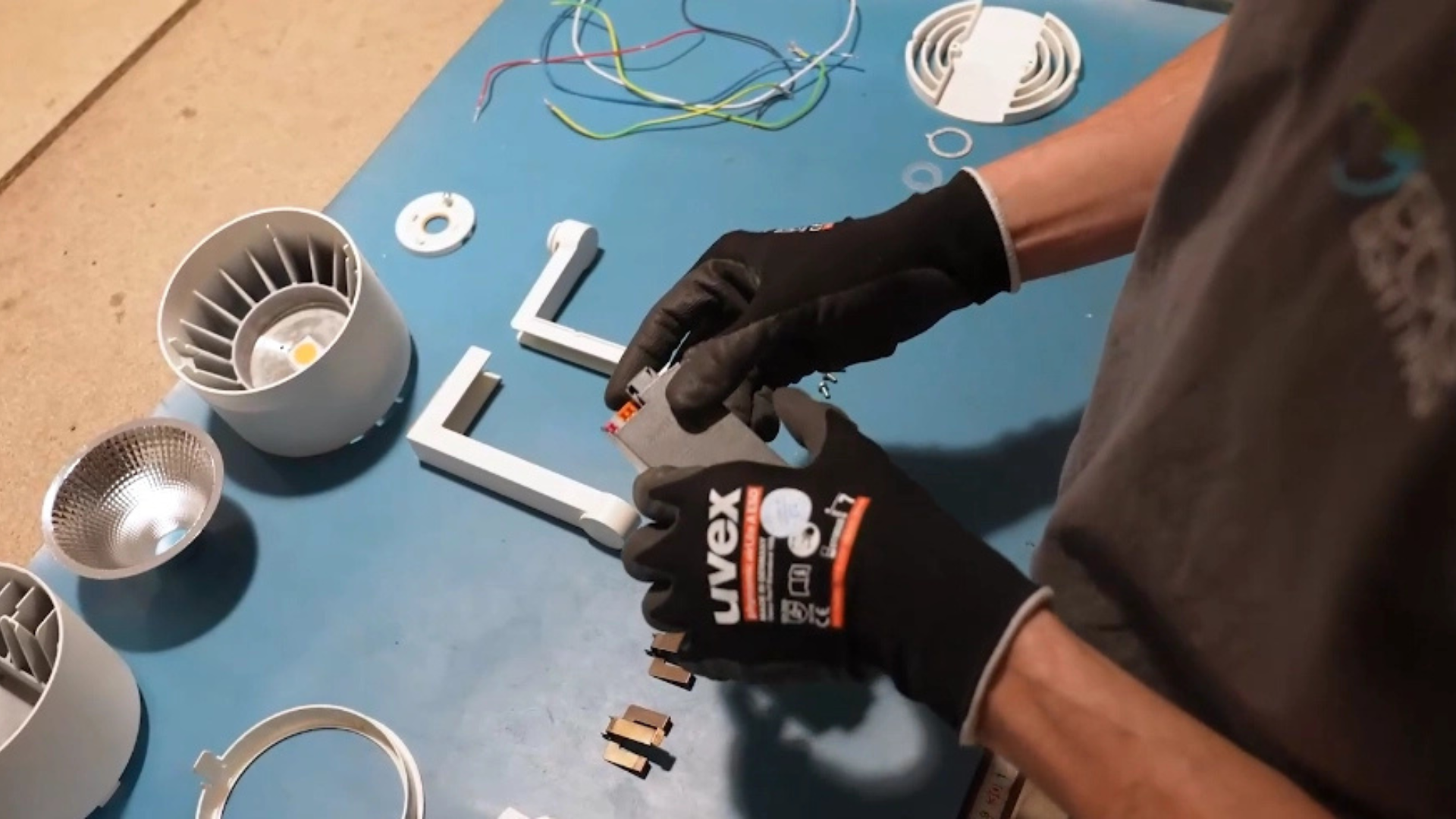
The standard defines remanufacture as an industrial process that creates a luminaire from used and/or new luminaires and components — and then specifies how that process should be run.
- 01
What counts as remanufacture
Distinct from repair, refurbishment or reuse — the finished product must meet performance at or above original specification, not just 'working again'.
- 02
The process itself
Assessment of the incoming fitting (the 'core'), disassembly, cleaning, restoration, reassembly, testing and release — with each stage documented.
- 03
Conformity and safety
Every remanufactured fitting is tested against the same safety standards as a new product. The remanufacturer takes on the manufacturer's legal responsibilities — re-marking, re-labelling and standing behind the modified product.
- 04
Traceability
The documentation trail that lets a client, an auditor or a future buyer verify what was actually done to a fitting.
Why traceability is the commercial point
Before this standard, a client had no independent framework for checking whether "remanufactured" meant a genuine rebuild or a quick wipe. Now they do.
Why EGG Lighting cares more than most
Built around the standard by design — not retrofitted to comply.
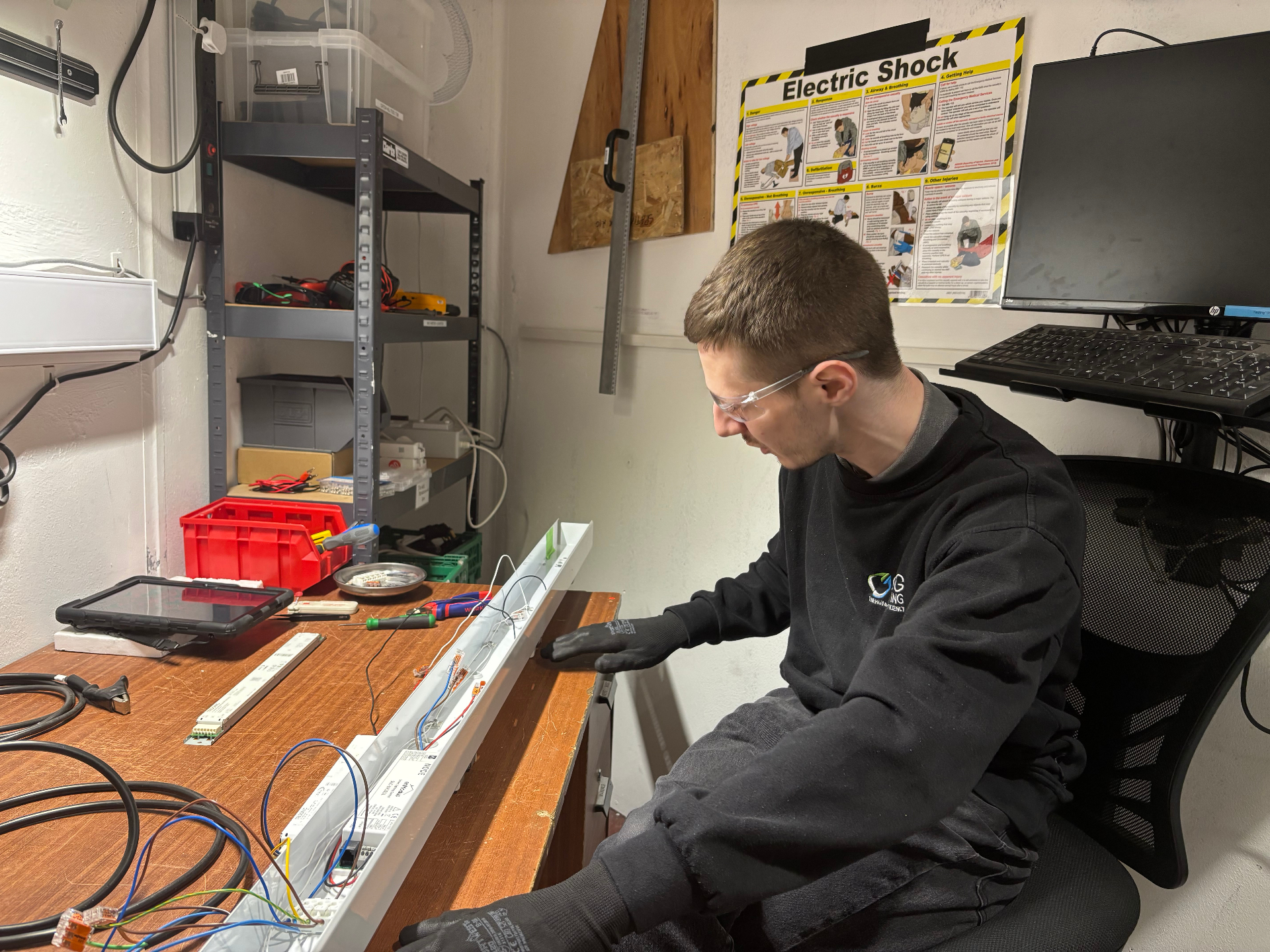
We didn't just read the standard — we contributed to its development, and our remanufacture process is built around it by design, not retrofitted to comply after the fact.
Every fitting we remanufacture goes through documented assessment, disassembly, cleaning, restoration, reassembly and testing — and comes back with a five-year warranty, a measured photometric file, and a UKCA declaration of conformity with EGG named as the manufacturer of the modified product.
That's the difference between a company that can prove what it did to your lights and one that's asking you to take its word for it.
The honest picture on policy
Direction, not an overnight obligation.
It's tempting to say a new standard plus new legislation means the floodgates are about to open. That's not quite right, and we'd rather tell you the true version.
The Circular Economy (Scotland) Act 2024 set the legislative framework, and the strategy that gives it direction — A Circular Economy Strategy for Scotland — was published in March 2026, with a vision out to 2045. The built environment is the first of its five priority sectors, sector roadmaps are due within a year of publication, and the strategy's stated approach is to maximise the useful life of existing assets before building new. When Scotland's Circular Economy Strategy needed a worked example of circular facilities management in the public estate, it chose lighting (p.16). We didn't need convincing — it's been our business model for years.
None of that created an overnight procurement obligation for public bodies. What it created is direction — and alongside it, a recognised technical benchmark that gives estate owners, auditors and public-sector procurement teams a way to check remanufacture claims against something concrete, rather than relying on a supplier's own description.
Slower than "the rules are about to force this," but more durable. Being early — with the standard built into how you already work — is worth more the longer that plays out.
If you're sitting on old fittings
Three questions the standard gives you the right to ask.
If someone tells you your lighting has been — or could be — "remanufactured," BS 8887-221:2024 gives you the questions to ask: what exactly was done, to which standard, and where's the documentation?
We can tell you, fitting by fitting, whether what you've got is genuinely worth remanufacturing — and if it isn't, we'll say so.
Start with a Lighting Decision Audit: a straight answer on what's worth remanufacturing, what's worth keeping as it is, and what genuinely needs replacing — before you commit to anything.
Conversation, not tender
Start with a conversation.
No tender process required. No sales pressure. A straight answer about what your estate is worth.